Callahan Supply
  • Home
  • Locations
  • Aggregates
  • Products & Services
  • Concrete Hold
  • Employment
  • Contact Us
  • Concrete Tips & Resources
  • Home
  • Locations
  • Aggregates
  • Products & Services
  • Concrete Hold
  • Employment
  • Contact Us
  • Concrete Tips & Resources

Concrete Tips & Resources


Cracking In Concrete Surfaces

What causes concrete to crack?
  • Concrete naturally expands and contracts as temperature and moisture conditions change. Cracking can occur when these movements are restrained or when adequate provisions are not made during design and construction.
  • Some cracking is normal and does not necessarily indicate a structural problem. Many early-age cracks are primarily cosmetic and may have little or no effect on the structural integrity or service life of the concrete.
How can cracking be minimized?
  • Design for anticipated loads and conditions.
  • Provide properly located contraction and isolation joints.
  • Use an appropriate concrete mixture.
  • Follow established placement and finishing practices.
  • Avoid adding excessive water at the jobsite.
  • Protect concrete from rapid moisture loss and extreme temperatures.
  • Begin proper curing promptly after finishing.

Joints in Concrete Slabs on Grade

What are concrete joints?
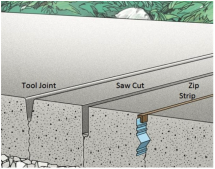
Joints are intentionally placed in concrete slabs to accommodate movement and help control where cracking occurs. They may be formed, tooled, saw cut, or created with manufactured joint-forming materials.

Why are joints important?
Properly designed joints relieve stresses within the concrete and encourage cracks to occur in planned locations rather than randomly across the slab.

Good jointing practices

  • Plan joint locations before placement.
  • Properly time and depth saw cuts.
  • Provide isolation joints at walls, columns, footings, curbs, and other fixed objects.
  • Space contraction joints appropriately.
  • Use joint fillers or sealants where required.

Curing In-Place Concrete

What is concrete curing?
Curing maintains adequate moisture and temperature in newly placed concrete so the cement can continue to hydrate and the concrete can develop its intended strength and durability.
Why is proper curing important?
  • Greater and more predictable strength
  • Improved durability and wear resistance
  • Reduced potential for early-age shrinkage cracking
  • Improved long-term performance and appearance
​How should concrete be cured?
  • Protect fresh concrete from excessive moisture loss during placement and finishing.
  • After finishing, begin an appropriate curing method as soon as conditions permit.
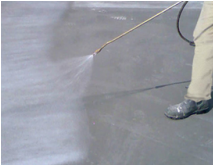
  • Methods may include water curing, curing blankets, plastic sheeting, or approved curing compounds.
  • The appropriate method and duration depend on the concrete mixture, weather, specifications, and application.

Crazing of Concrete Surfaces

What is crazing?
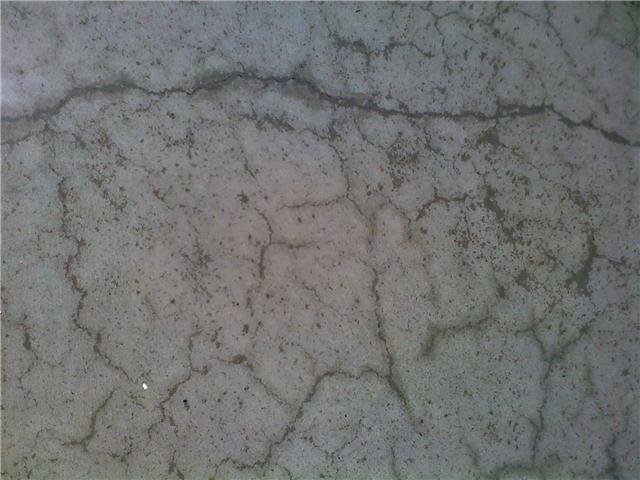
Crazing is a network of very fine, shallow surface cracks caused by shrinkage of the surface layer. Crazing is generally cosmetic and typically does not affect structural integrity.
How can crazing be minimized?
  • Use an appropriate concrete slump.
  • Avoid adding excessive water during finishing.
  • Do not finish while bleed water remains on the surface.
  • Avoid excessive finishing or overworking the surface.
  • Begin curing promptly.
  • Protect concrete from rapid moisture loss.

A Note About Concrete
Concrete is a durable, site-placed product. Weather, sub-grade conditions, materials, finishing, curing, loading, and other job-site conditions can affect its final appearance and performance. Proper design, placement, finishing, jointing, and curing are essential for achieving the best possible results.

Examples
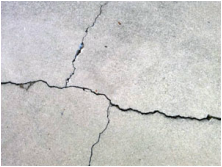
Cracking Concrete
Cracking concrete surface
Joints in Concrete
Joints in Concrete
Curing Concrete
Concrete curing
Concrete crazing
Concrete crazing

​Callahan Supply, LLC

​Building relationships one pour at a time!

Cadillac Location
10429 W. Watergate Rd, Cadillac, MI 49601 
P: 231.878.9023    E: [email protected]

Traverse City Location
3124 Bristol Rd.
Traverse City, MI
P:  231.878.4866   E:  [email protected]
PumpInAction
Employees 
Callahan Safety Plan
SDS Handbook​
  • Home
  • Locations
  • Aggregates
  • Products & Services
  • Concrete Hold
  • Employment
  • Contact Us
  • Concrete Tips & Resources